Why the ground under Edmond moves, and what you can do about it
Central Oklahoma sits on Permian red beds — clay that swells when wet and shrinks when dry. Nothing you do will stop that. What you can control is whether it happens evenly around your house, and that is the whole game.
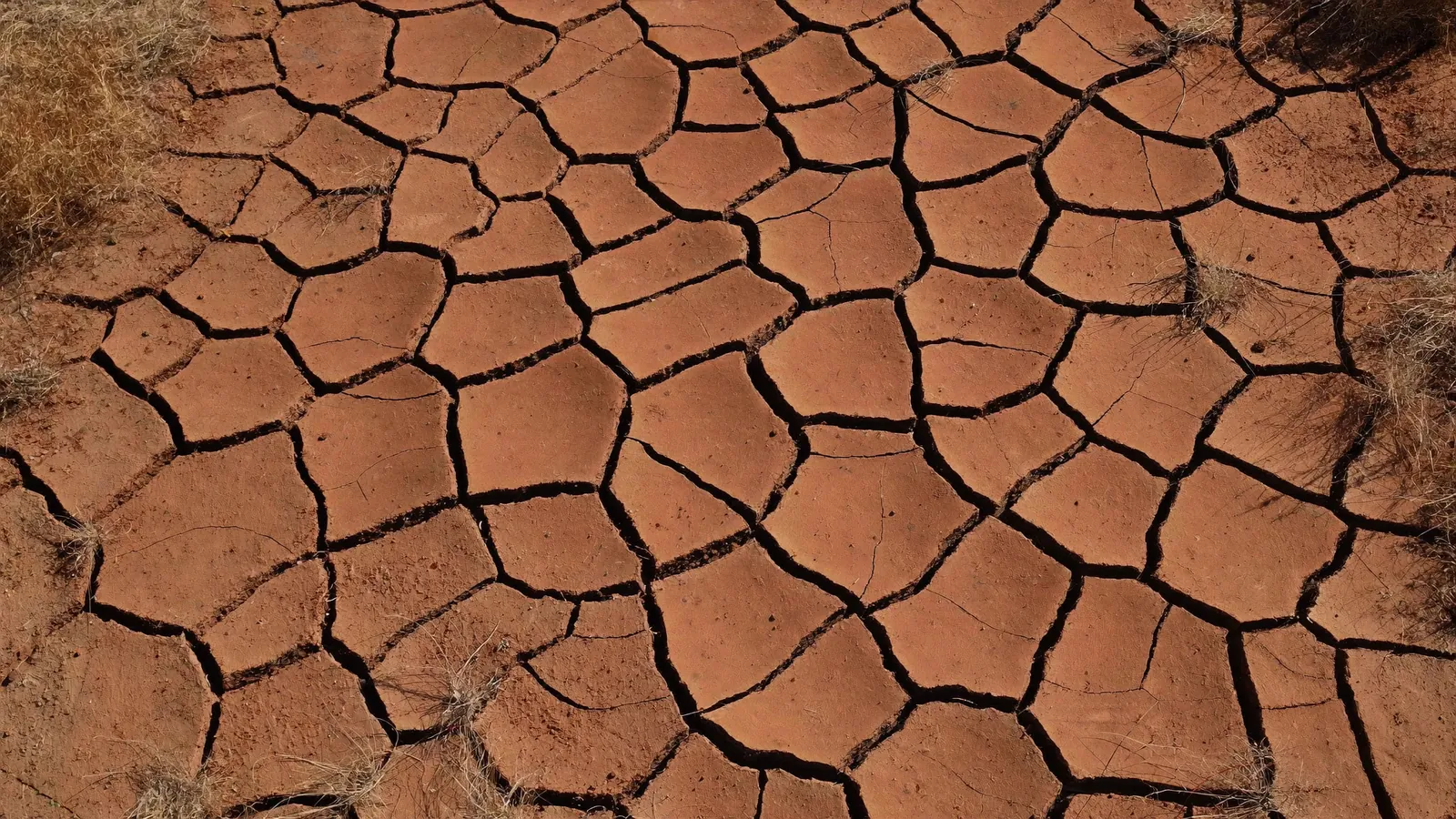
Almost every foundation problem in Edmond traces back to one property of the ground: central Oklahoma's clay changes volume with moisture content. Understanding that mechanism is genuinely useful to a homeowner, because it explains which interventions work, which do not, and why two identical houses on the same street can behave completely differently.
What is under your house
Central Oklahoma lies on Permian-age red beds — reddish-brown clay and shale formations laid down a very long time ago and highly prone to shrink-swell behavior. The clay minerals responsible are montmorillonite and bentonite, which absorb a great deal of water into their structure and release it again as they dry. Soil scientists rate this with the plasticity index: above roughly 40 a clay is considered highly expansive, below about 20 only marginally so. Central Oklahoma's clays sit at the upper end, which is why Oklahoma and Texas are consistently named among the states worst affected by expansive soils in the United States.
The annual cycle
Edmond receives around 31 inches of rain in an average year, which is unremarkable. What matters is the distribution. May averages roughly 4.6 inches and January around 0.8, and the summers bring prolonged dry spells with average highs near 91°F and July averaging around 93°F. So the soil goes through a predictable annual cycle: it dries and contracts hard through summer, opening fissures you can put a finger into, then takes up water rapidly when the spring rain arrives on ground that has been cracked open since July. Water reaches depth quickly through those fissures rather than soaking in evenly, and the clay swells.
The critical point, and the one most people miss: uniform movement does almost no damage. If your whole house rose and fell by an inch together, the brick would stay square, the doors would still latch and the floors would still feel flat. What breaks buildings is differential movement — one part of the footing moving while another does not.
Edge lift and center lift
Two patterns recur on slab foundations here and they are opposites, which is why a diagnosis matters before anyone starts work.
Center lift happens because the soil beneath the middle of a slab is covered and shaded, so it retains moisture, while the exposed perimeter dries hard through the summer and contracts. The middle of the floor ends up high relative to the edges — a domed floor. The remedy is removing the moisture differential and letting things equalize. Piering the perimeter of a heaving slab can make things worse.
Edge lift is the inverse: the perimeter soil takes on water faster than the covered soil beneath, typically after heavy rain against a house with poor drainage, so the edges rise relative to the middle.
Perimeter settlement, the pattern most people picture, is the perimeter soil shrinking away in drought and the slab edge dropping as it loses support. This is the one piers are for.
What makes it uneven
Drainage. Downspouts discharging at the wall, ground falling back toward the house, hard surfaces sloping the wrong way — all of these water one part of the perimeter heavily while the rest dries.
Trees. A mature tree is a pump, drawing substantial moisture from soil within reach of its roots through the summer. Close to a house, it dries one side preferentially. This is the dominant factor in older neighborhoods with established canopies.
Plumbing. A supply or sewer leak under a slab keeps one zone saturated permanently, producing localized movement that imitates soil settlement closely.
Aspect and shading. The south and west elevations dry faster than the north. A shaded side and a sun-baked side of the same house are at different moisture contents for much of the year.
Irrigation. Perimeter sprinkler zones running through the summer keep one strip damp while the rest of the perimeter contracts.
What you can actually do
You cannot change the clay. You can change how evenly it is watered, and that is most of the battle. Extend downspouts six to ten feet clear. Re-establish a positive grade over the first several feet from the wall. Keep irrigation off the foundation. Consider root barriers rather than removing mature trees, since taking out a large tree allows the soil it was drying to rehydrate and swell. And in a severe drought, maintaining some moisture around the perimeter with slow deep watering is genuinely protective — it prevents the hard shrinkage that opens voids under your footing. Consistency is the objective, not dryness.
Common questions
Can I stop my foundation from moving?
Not entirely — the clay will always respond to moisture and nobody can change that. What you can realistically achieve is making the movement even and moderate rather than severe and one-sided, which is what prevents damage. Consistent perimeter moisture, controlled drainage, sensible tree management and no irrigation against the wall will get most houses through the annual cycle without damage. Houses that get hurt are nearly always the ones with a pronounced moisture difference between one part of the perimeter and another.
Should I water my foundation in a drought?
Within reason, yes — it is a legitimate and under-used technique in this climate. The aim is preventing the hard shrinkage that opens voids beneath your footing during a long dry spell, and the method is slow, deep, consistent watering around the perimeter, typically with a soaker hose set back a foot or two from the wall, applied evenly all the way round. Two cautions: even is the key word, since watering one side only creates exactly the differential you are trying to avoid, and the goal is maintaining moisture rather than saturating the ground.
Why does the crack open in summer and close in spring?
Because you are watching the clay cycle directly. The soil dries and shrinks through an Oklahoma summer, part of your foundation loses support, and the crack opens. Spring rain rehydrates the clay, it swells, the structure moves back and the crack narrows. That seasonal reversal is actually a reassuring sign — it suggests cyclical movement rather than progressive settlement. What concerns us is a crack that opens and does not close, or one that widens year on year. This is exactly why we fit telltales and read them across a season.
Is a post-tension slab better on this soil?
Yes, meaningfully. Post-tensioning puts the concrete into compression with stressed steel tendons, which gives the slab much more capacity to act as a single stiff unit and bridge across a soft zone rather than cracking into pieces. That is why it became standard practice on expansive soils and why most newer Edmond construction uses it. It does not stop the soil moving, and a post-tension slab over a zone that has lost bearing support can still settle as a whole — it simply handles the stress far better than a conventional slab.
Does adding a patio or driveway affect the soil?
It can, in both directions. Covering ground stops rainfall reaching the soil beneath, which keeps it at a more constant moisture content — generally helpful. But it also alters where water runs, and a patio or drive sloping back toward the house delivers runoff straight to the foundation, which is distinctly unhelpful. Large hard surfaces on one side of a house and open ground on the other can create precisely the moisture differential that causes movement. Worth thinking about the falls before you pour.
Why is the soil here red?
Iron oxide in the Permian red beds — the same chemistry that makes rust red, formed when these sediments were laid down under oxidizing conditions. It is a visual signature of the formation rather than a property that affects engineering behavior directly. What matters for your foundation is the clay mineralogy, principally the montmorillonite content, which is what gives the soil its shrink-swell capacity. The red is simply how you know where you are.
Related: Foundation repair · Drainage · Slab repair · Reading the symptoms