Foundation work in Yukon, across a housing stock that spans sixty years of building
A Canadian County city on the I-40 corridor with a long Czech heritage and a build-out that runs from mid-century through to current construction — which means slabs of every generation sitting on the same expansive clay.
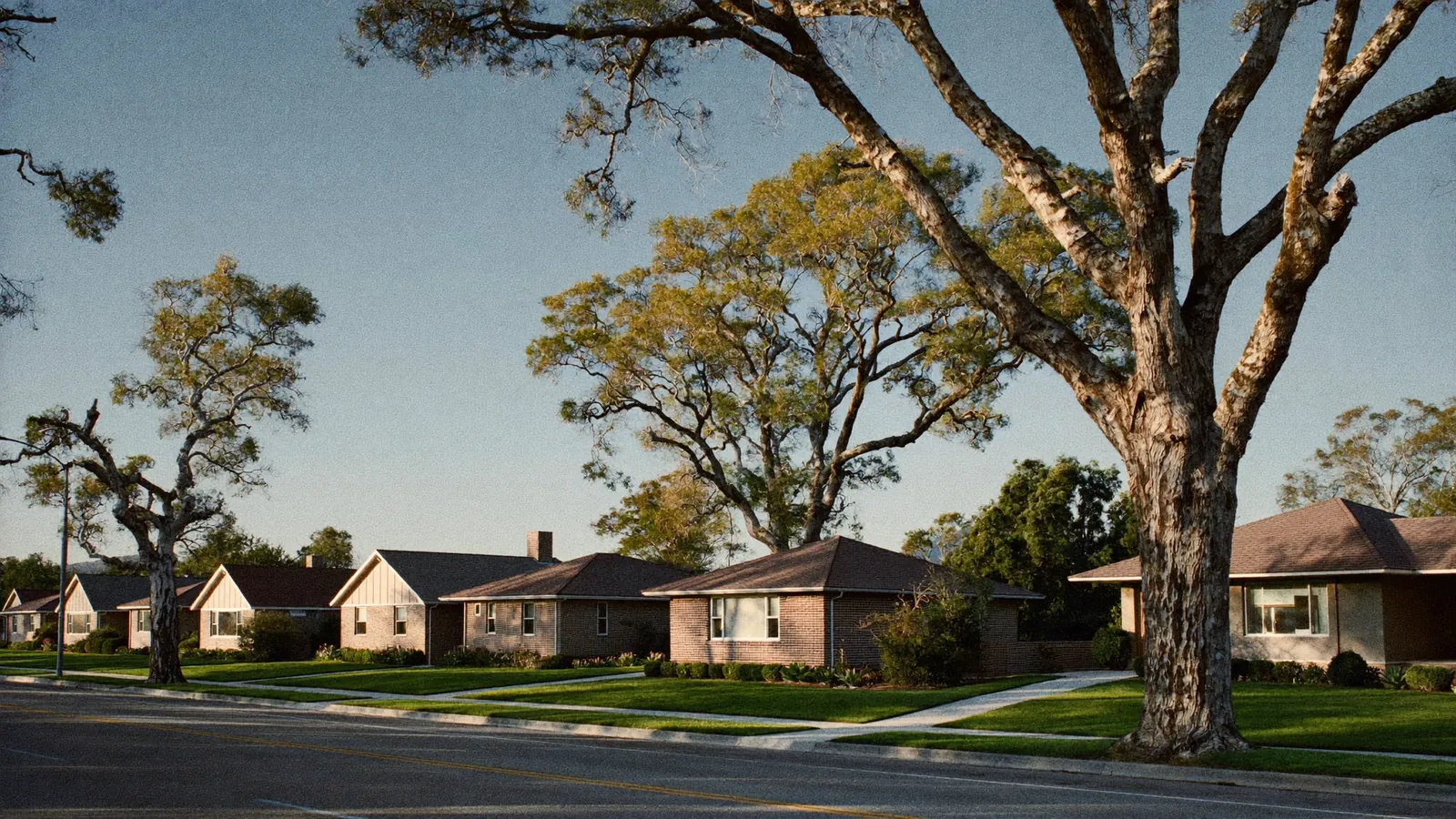
Yukon sits west of Oklahoma City in Canadian County, along the I-40 corridor, with a settlement history that shows in the place itself — the Czech heritage is still marked each year by the Czech Festival, and Czech Hall Road is a reminder of who farmed this ground first. For foundation work, what matters is that Yukon has been building steadily for a long time, so the housing stock spans generations rather than clustering in one era.
That range is the defining feature. Mid-century slabs here have the characteristics of their time: thinner concrete, lighter reinforcement, no post-tensioning, no vapor barrier beneath, no perimeter drainage, and now original plumbing running underneath that is well into old age. Housing from the 1980s and 90s sits in between. The newest subdivisions on the edges of town are post-tension slabs on recently graded ground, where the issues are young-house issues: backfill still consolidating, flatwork dropping before the house does, and construction-era settlement that owners reasonably mistake for something worse. One town, three different conversations, and the elevation survey is what tells us which one we are having.
The soil does not vary much. Canadian County sits on the same central Oklahoma expansive clay as Oklahoma and Logan counties — Permian red beds with high shrink-swell potential — and the same weather drives it: long dry summers that shrink the clay away from footings, then spring rain, with May averaging several times January's rainfall, landing on ground that has been cracked open since July. The movement mechanism in Yukon is identical to Edmond's. What differs is the age and construction of the houses it acts on.
One local note worth making. A good deal of Yukon's residential ground was farmland within living memory, and agricultural land that has been built on carries its own history — old field drainage, filled farm ponds, former outbuilding footprints, and variable fill where a developer leveled a site. These produce localized soft spots that do not correspond to anything visible on the surface, and they are a real cause of the isolated settlement we sometimes find under one corner of an otherwise sound house. It is one more reason the contour of the floor tells us more than the pattern of the cracks.
What we do in Yukon
All three construction generations
Mid-century, late-century and current post-tension slabs each assessed on their own terms rather than through one standard scope.
Post-tension tendons located
Scanned and marked before any cutting on the newer subdivisions, where post-tensioned slabs are the norm.
Aged under-slab plumbing screened
Checks for the old supply and drain failures that mimic settlement in Yukon's older housing.
Former agricultural ground considered
Old field drainage, filled ponds and variable developer fill as causes of isolated settlement with no surface explanation.
Drainage and downspouts first
The cheap, high-return work identified before any pier plan is proposed.
Canadian County permitting
The right jurisdiction's process followed for the address, which west of the river is not Edmond's.
Areas and roads we cover
- Downtown Yukon
- Czech Hall Road
- Garth Brooks Boulevard
- Main Street
- Vandament Avenue
- Cornwell Drive
- Yukon Parkway
- Mustang Road corridor
- Frisco Road
- I-40 corridor
- Surrey Hills
- Canadian County rural addresses
Foundation services in Yukon
- Foundation inspection and elevation survey, foundation repair, steel and helical piers
- Slab repair, crack injection, house leveling, pier and beam repair
- Concrete leveling, crawl spaces, basement and cellar waterproofing
- French drains and drainage, retaining walls, commercial buildings
Questions from Yukon homeowners
Is the soil west of the river any different?
Not in any way that changes the work. Canadian County sits on the same central Oklahoma red beds — expansive clay with high shrink-swell potential — and the same drought-and-downpour cycle drives movement there exactly as it does in Edmond and Oklahoma County. Anyone suggesting your side of the metro has materially better or worse soil is selling something. What varies between neighborhoods is the housing: age, construction type, and what the ground was used for before the subdivision went in.
My house is in a new Yukon subdivision and it's already cracking. Why?
Most likely initial settlement and shrinkage rather than a fault. New construction settles into its soil over the first couple of years, concrete shrinks as it cures, and the backfill around the foundation keeps consolidating well past handover — which is why the driveway and front walk usually drop before anything else. That said, new ground can also be variable fill, and genuine localized settlement does happen in young subdivisions. The elevation survey separates the two, and if there is a live builder warranty a measured report is a useful document to hold.
Was my lot farmland before?
Across much of Yukon's residential area, quite probably — a great deal of this ground was agricultural within living memory. It matters because former farmland carries buried history: old field drains, filled ponds and stock tanks, demolished outbuilding footings, and fill placed when a developer leveled the site. Any of those can create a soft zone under part of a house with nothing visible on the surface to explain it. When we find isolated settlement under one corner of an otherwise sound house out here, that is frequently the reason.
Do you cover Yukon from Edmond?
Yes, routinely — it is a straightforward run across the metro and Canadian County is a normal part of our service area, along with Mustang and Piedmont. There is no travel surcharge for Yukon addresses. The one practical difference is permitting: foundation work in Yukon goes through Canadian County and the City of Yukon rather than through City of Edmond Building and Fire Code Services, and we deal with the right office for the address.
How do I know if my slab is post-tensioned?
Look along the slab edge outside, low down, for small patched pockets spaced at intervals, and check the garage for a stamped plate stating that the slab is post-tensioned — many builders fit one. Your closing documents or original plans will confirm it. Yukon homes from roughly the 1990s onward are commonly post-tensioned, particularly in the newer subdivisions. We scan and mark tendons before any interior cutting regardless of what the paperwork says, because the consequence of getting it wrong is serious.
Should I fix drainage before considering piers?
In most cases yes, and we will tell you so even though it is the smaller job. If the survey shows modest movement and the exterior walk finds downspouts at the wall, ground falling back toward the house or irrigation soaking the perimeter, correcting the water and monitoring through a seasonal cycle is the proportionate step — it costs a fraction of piering and a good number of houses stabilize. Where real settlement with lost bearing support shows up on the contour, drainage will not lift anything and we will say that just as directly.
Nearby: Mustang · Piedmont · Bethany · full service area