Foundation work in Guthrie, where the housing stock is a century older than anything in Edmond
Oklahoma's territorial capital kept its buildings. That means pier-and-beam construction, nineteenth-century masonry, original footings and crawl spaces — a completely different set of problems from a modern slab, and usually a cheaper one to fix.
Guthrie served as Oklahoma's territorial and first state capital from 1890 to 1910, and when the capital moved to Oklahoma City the building stopped. That accident of history is why Guthrie has one of the largest intact Victorian-era commercial districts on the National Register, and why the residential streets around it are full of houses that predate almost everything in Edmond by half a century or more. For foundation work it changes nearly every assumption.
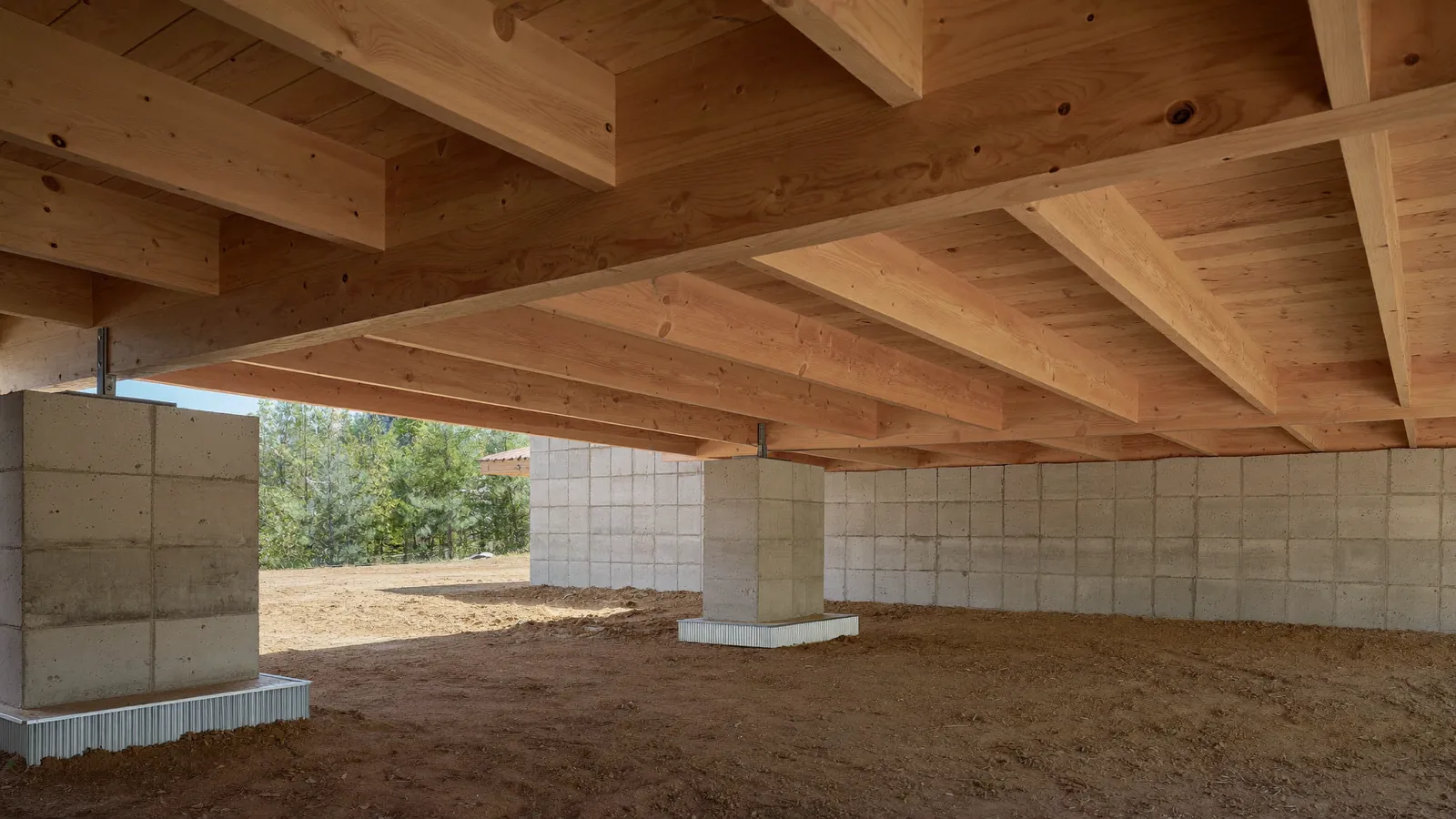
Start with construction. A Guthrie house of that era is pier and beam: a perimeter stem wall, interior piers carrying timber girders, joists spanning between, and a crawl space underneath. Slab-on-grade did not arrive in Oklahoma residential building in volume until decades later. So when a floor in Guthrie slopes or bounces, the cause is frequently inside the crawl space — a crushed pier block, a shim that rotted out, a girder sagging between supports that were always too far apart — rather than anything the clay did. That is genuinely good news for an owner. A pier-and-beam repair typically runs $2,500 to $12,000 against $8,000 to $18,000 for comparable slab work, because everything is reachable and no concrete has to be cut.
Then the masonry. Guthrie has a great deal of brick and stone, both in the downtown commercial buildings and in the houses, much of it laid in lime mortar on footings that were adequate by the standards of 1900 and are shallow by any standard since. Unreinforced masonry has very little tolerance for differential movement — it cracks rather than flexes — so stair-step cracking appears early and tells you clearly where the ground went. Repointing historic masonry is its own discipline: modern cement mortar is harder than old brick and will spall the brick face over time, so soft lime-based mortar is the correct material and matching it is a matter of care rather than catalogues.
What ties it together is water, as always, but with a hundred-and-twenty-year head start. Most of these houses were built without perimeter drainage, with gutters that have been replaced piecemeal or removed, on lots regraded repeatedly over a century. Crawl spaces with bare soil and no vapor barrier are the norm rather than the exception. Fixing the moisture and the drainage is usually the difference between a repair that lasts and the same job again in a decade.
What we do in Guthrie
Pier-and-beam expertise
Blocks, pads, shims, girders and joists assessed from inside the crawl space, because in Guthrie that is where the answer usually is.
Historic masonry handled appropriately
Soft lime-based mortar for repointing nineteenth-century brick, not modern cement that spalls the face of old brick over time.
Shallow period footings assessed
Original footings judged on what they are, with underpinning proposed only where the structure genuinely needs it.
Crawl space moisture dealt with
Vapor barrier, ventilation and drainage for spaces that have had bare soil under them since the territorial period.
Drainage retrofitted
Perimeter drainage and downspout routing on lots that were never built with either.
Sympathetic to the building
Repairs that respect how an old house was put together, rather than applying a modern slab playbook to timber and lime mortar.
Areas and roads we cover
- Downtown Guthrie historic district
- Capitol Hill
- West Guthrie
- East Guthrie
- Highland Park
- Division Street
- Oklahoma Avenue
- Noble Avenue
- Springer
- I-35 corridor
- Cottonwood Flats
- Logan County rural addresses
Foundation services in Guthrie
- Foundation inspection and elevation survey, foundation repair, steel and helical piers
- Slab repair, crack injection, house leveling, pier and beam repair
- Concrete leveling, crawl spaces, basement and cellar waterproofing
- French drains and drainage, retaining walls, commercial buildings
Questions from Guthrie homeowners
My Guthrie house is over a hundred years old. Is movement inevitable?
Some is, and a house of that age that has never moved at all would be the surprise. The useful question is not whether it has moved but whether it is still moving. Many historic Guthrie homes settled into their position decades ago and have been stable ever since — the cracks are real, they are old, and nothing needs doing. We fit telltales and re-survey after a seasonal cycle where that is the question, because on a hundred-year-old house the difference between historic and active movement is the entire decision.
Is pier and beam cheaper to repair than a slab?
Usually yes, often substantially. Everything is accessible: we can get under the house, see the supports, and replace blocks, shims and girders without cutting concrete or driving steel to depth. Typical pier-and-beam projects run roughly $2,500 to $12,000 where the equivalent slab work runs $8,000 to $18,000. It is one of the genuine advantages of owning an older house in Guthrie rather than a newer one somewhere else.
Can you repoint historic brick properly?
Yes, and the material choice is the thing that matters most. Nineteenth-century brick was laid in soft lime mortar, and the mortar was designed to be the sacrificial element — softer than the brick, so movement and moisture damage the joint rather than the unit. Repointing with modern Portland cement mortar creates joints harder than the surrounding brick, and the brick face spalls instead. We use appropriate lime-based mortar and match color and joint profile as closely as we can.
Do you work on the downtown commercial buildings?
Yes. The historic commercial district has its own issues — party walls, unreinforced masonry, shared foundations between adjoining buildings, basements and cellars that were common in commercial construction of that period, and alterations accumulated over a century. We survey, coordinate with a structural engineer where the building warrants it, and work to whatever requirements apply to a listed or historic-district property. Tell us at the outset if the building has a historic designation.
My crawl space has bare dirt. Is that a problem?
It is the most common and most fixable problem in Guthrie. Bare soil in a crawl space evaporates moisture upward continuously, keeping humidity high against timber year-round, and in a house of this age that timber has been breathing it for a very long time. A sealed vapor barrier over the ground is inexpensive and makes an immediate measurable difference. Where rot has already taken hold or the space stays wet regardless, full encapsulation is the proportionate step up.
Is Guthrie's soil different from Edmond's?
Not meaningfully — Logan County sits on the same central Oklahoma red beds, with the same expansive clay and the same drought-and-downpour cycle driving it. What differs is the housing. Guthrie's older pier-and-beam construction responds to soil movement differently from a modern slab, generally with more tolerance in the structure and more visible distress in masonry. Same ground, different buildings, different repairs.
Nearby: Deer Creek · Piedmont · The Village · full service area