Foundation work in Piedmont, where drainage is entirely your own problem
A growing Canadian County town of acreage lots and newer houses, mostly outside any municipal storm drainage system. On a large rural lot, where the water goes is a decision somebody has to make — and often nobody did.
Piedmont sits west of Edmond in Canadian County, a smaller town that has grown steadily and is known locally for its schools. The housing is predominantly newer and a good proportion of it sits on acreage — lots measured in acres rather than feet, often with the house set well back, frequently on ground that was pasture or cropland until relatively recently. That rural character is what makes foundation work here distinctive, and almost all of it comes back to water.
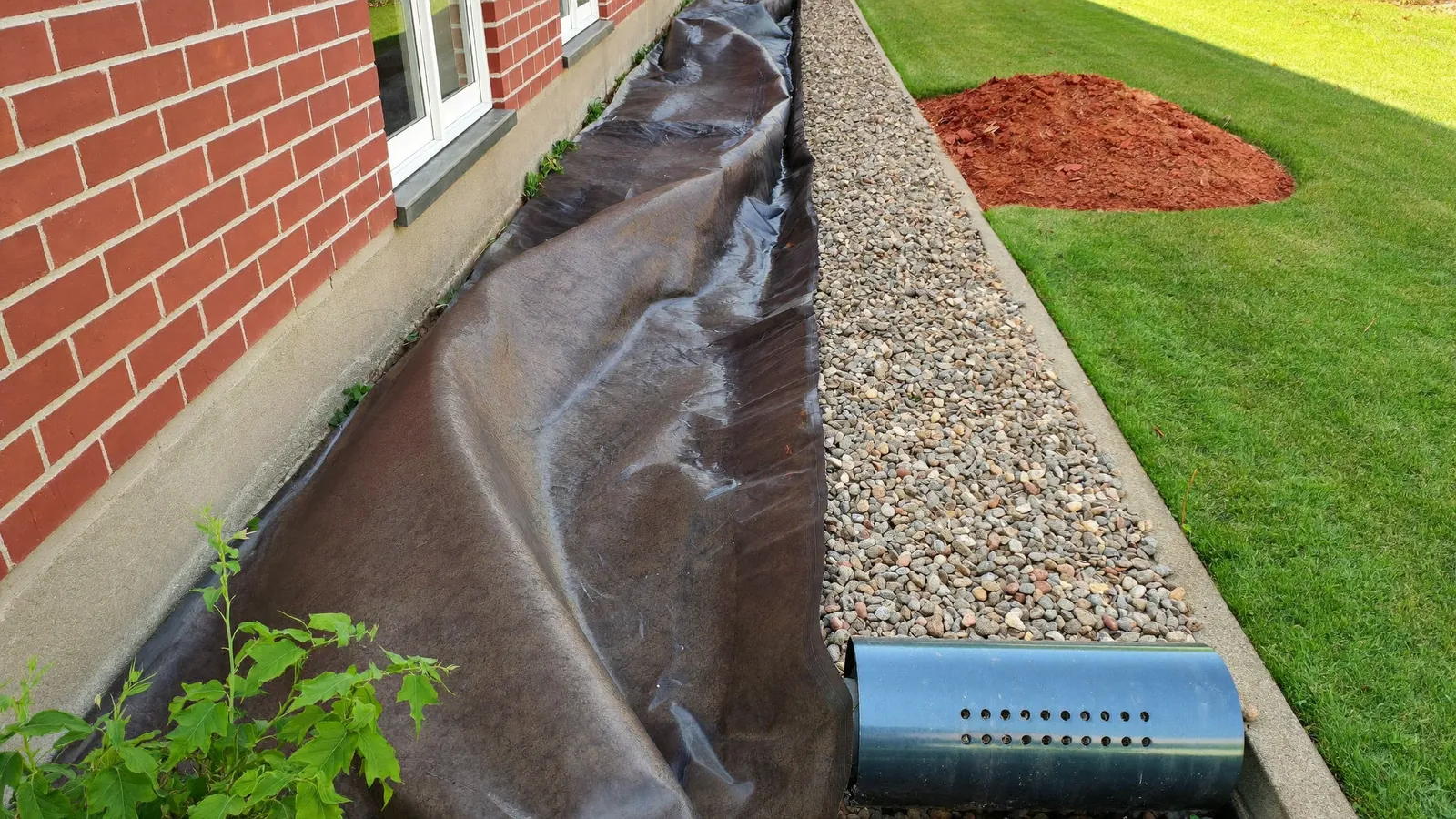
On a suburban lot, surface water is somebody else's problem once it leaves your property: there are kerbs, gutters, storm inlets and a municipal system sized to take it. On an acreage property outside that system, there is no such arrangement. Water that falls on your land stays on your land until it finds a way off, and on heavy clay that can take a long time. If the original grading left a low area near the house, if the drive crosses a natural flow path and dams it, or if a neighboring property discharges across your boundary, the result is water standing against or near your foundation for extended periods after rain. Clay that sits saturated swells; clay that then bakes through an Oklahoma summer shrinks hard. That cycle, running at different rates around different parts of the house, is the movement mechanism in its purest form.
So on Piedmont properties we spend more time than usual walking the land. Where does water arrive from, where does it pond, how does the drive and any hard standing affect the flow, where could a drain realistically discharge to, and is there anywhere on the lot that water can actually go. Discharge is the practical constraint that catches people out: a drain is only as good as its outlet, and on a flat acreage lot with heavy clay there is sometimes nowhere obvious for water to leave, which means the design has to be thought about rather than copied from a suburban job.
The houses themselves are mostly newer — post-tension slabs, with tendons to locate before any cutting, and the young-house questions about initial settlement and consolidating backfill that go with recent construction. Outbuildings are a common extra: shops, barns, garages and guest accommodation, usually built on lighter foundations than the house with correspondingly less margin, and frequently the first structures on a property to show movement.
What we do in Piedmont
The whole lot walked, not just the house
Flow paths, ponding, boundary discharge and the effect of drives and hard standing across an acreage property.
Drainage designed for no municipal system
Collection and, crucially, a workable discharge point on a flat clay lot where there is often nowhere obvious for water to go.
Outbuildings assessed too
Shops, barns and detached garages on lighter foundations, which commonly move before the house does.
Post-tension slabs scanned
Tendons located and marked before any interior cutting on Piedmont's predominantly newer housing.
Former agricultural ground considered
Old field drains, filled ponds and stock tanks under ground that was farmland until recently.
Canadian County permitting
The right jurisdiction for the address, which out here is not the City of Edmond.
Areas and roads we cover
- Piedmont proper
- Piedmont Road
- NW 164th Street
- NW 178th Street
- Edmond Road NW
- Cimarron Road
- Rockwell Avenue north
- Waterloo Road west
- Surrey Hills area
- Deer Creek Road west
- Canadian County rural routes
- Acreage properties throughout
Foundation services in Piedmont
- Foundation inspection and elevation survey, foundation repair, steel and helical piers
- Slab repair, crack injection, house leveling, pier and beam repair
- Concrete leveling, crawl spaces, basement and cellar waterproofing
- French drains and drainage, retaining walls, commercial buildings
Questions from Piedmont homeowners
Nobody maintains drainage out here. Does that matter for my foundation?
It matters more than almost anything else on an acreage property. Without a municipal storm system, water that lands on your lot stays there until it finds a route off, and heavy clay gives it very little help. Water standing near the house for days after rain keeps that section of clay saturated and swollen while the rest of the perimeter dries, and differential moisture is the mechanism that moves foundations. On rural lots, drainage design is genuinely the main event rather than a supporting item.
Where would a french drain discharge to on a flat lot?
That is the real design question out here and the one that separates a drain that works from a trench full of gravel. Options are a lower point on your own property, a drainage easement or ditch if one serves the area, a dry well sized for the volume where the subsoil will accept it, or a daylight outlet if there is enough fall anywhere on the lot. On a genuinely flat clay property, sometimes the honest answer is that a conventional gravity drain cannot work and the better approach is regrading plus a collection and pumped discharge. We work that out on site before proposing anything.
My shop building is cracking but the house isn't. Why?
Outbuildings generally have less margin. Shops, barns and detached garages are usually built on lighter foundations — thinner slabs, shallower footings, less reinforcement — because they carry less load and are specified accordingly. They also often sit on ground that was prepared less thoroughly than the house pad, and they commonly have no gutters at all, so roof water discharges straight onto the perimeter. Put together, they will frequently show movement well before the house does. It is worth looking at the house too, but the outbuilding being first is normal.
Was my land farmed before the house was built?
Across much of Piedmont, very likely. Former agricultural ground carries buried features that affect foundations: old field drainage, filled ponds and stock tanks, demolished outbuilding footings, and fill placed when the building pad was formed. Any of these can leave a soft zone under part of a structure with nothing on the surface to indicate it. Where we find isolated settlement under one corner of an otherwise sound building on rural ground, that history is frequently the explanation.
Is a septic system relevant to foundation movement?
It can be, and it is worth mentioning at the survey. A septic field keeps a defined area of soil consistently wet, and if that area lies close enough to the house, it creates exactly the kind of localized moisture difference that drives differential movement. A failing or saturated field is a stronger version of the same thing. We will ask where your system and field are located and factor it into the picture — it is a question that would not arise on a suburban lot.
Do you charge extra to come out to Piedmont?
No. Piedmont is a standard part of our service area along with Yukon and Mustang, and there is no travel surcharge for Canadian County addresses. Acreage properties do take longer to survey properly, because walking the lot and understanding the water is a real part of the job rather than a formality, and we allow for that in scheduling rather than in a travel charge.
Nearby: Mustang · Yukon · Guthrie · full service area