Foundation work in Bethany, where the housing runs from pier and beam to early slab
An older Oklahoma County suburb built around Southern Nazarene University and the Route 66 corridor, with a housing mix that spans both construction eras — so the first job is establishing what you actually have.
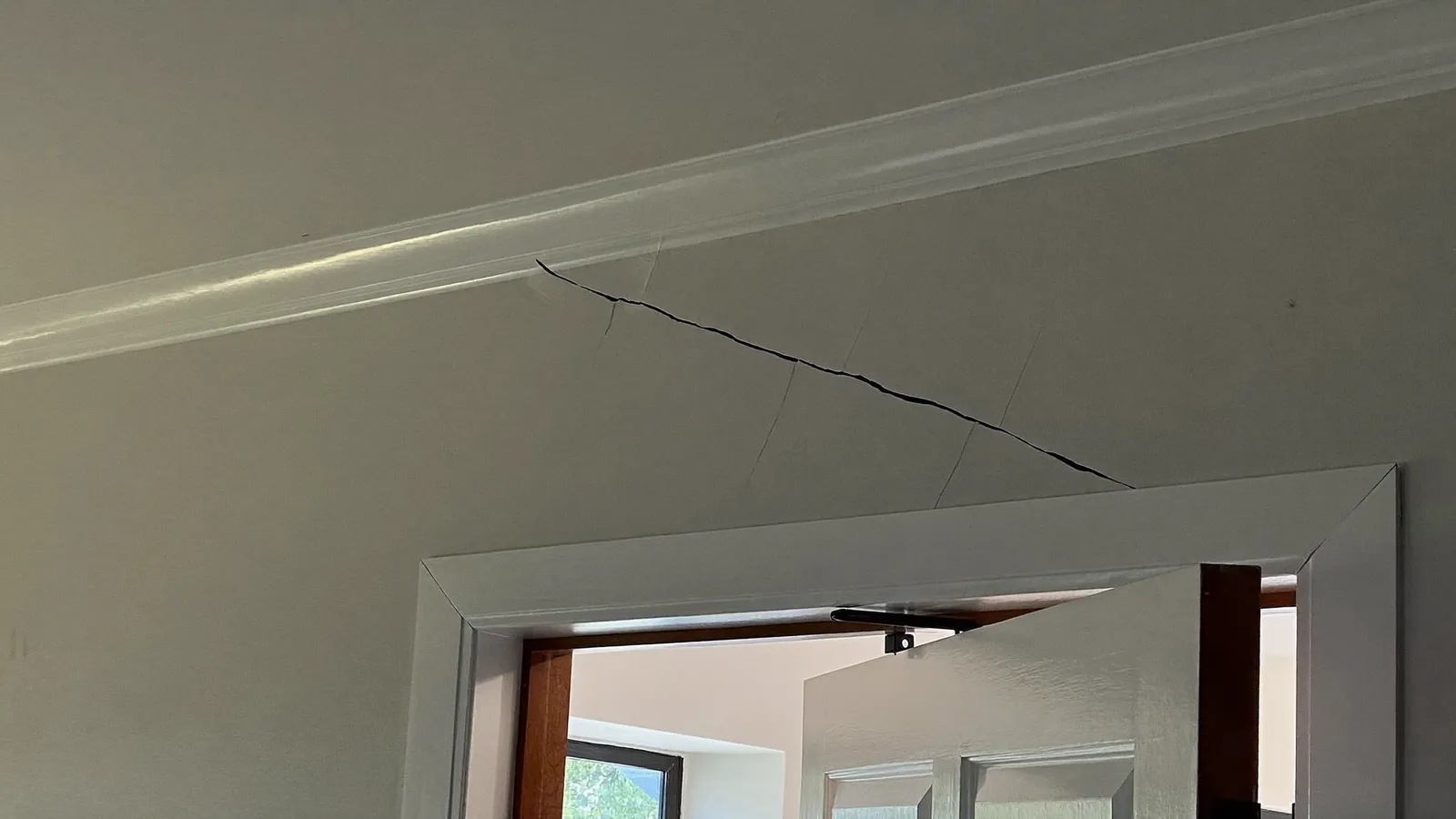
Bethany grew up around Southern Nazarene University along what is now the Route 66 corridor, and its housing stock reflects a long build-out rather than a single era. That mixture is the practical point for foundation work: within a few streets you can find genuine pier-and-beam houses from the earlier period and slab-on-grade houses from the post-war decades, and the two fail differently, cost differently to repair, and need different people looking at them. Establishing which you have is not a formality here — it is the first real question, and it is why we would rather open a crawl space hatch than quote from a photograph.
On the pier-and-beam houses, the problems are structural and accessible: crushed pier blocks, shims that have rotted, girders sagging between supports, joists that have lost bearing. Crawl spaces in this housing stock are frequently unlined, with bare soil evaporating moisture into timber continuously, and a good proportion of what we find under these houses is damage that moisture caused over decades rather than anything the clay did. That work is comparatively affordable and the results are immediate.
On the early slab houses, it is the familiar central Oklahoma story with a mid-century twist: thinner slabs, light reinforcement, no post-tensioning, no vapor barrier and no perimeter drainage, now several decades into the shrink-swell cycle. Under-slab plumbing of the same vintage is a live consideration, as it is anywhere with housing of this age, and we screen for it before recommending structural work.
Two local factors run across both types. Bethany has mature street trees through much of the older residential grid, and a large tree close to a house dries the clay on that side preferentially — the same mechanism that dominates in Nichols Hills, producing cracking concentrated on one elevation. And the drainage on these lots is generally original or worse: gutters replaced piecemeal, downspouts discharging at the wall, beds built up over decades, and no perimeter drainage anywhere. As elsewhere, the cheap work comes first, and on a fair number of Bethany houses correcting the water and monitoring through a season is the proportionate recommendation.
What we do in Bethany
Construction type established first
Pier and beam or early slab — a genuine question in Bethany, and the answer changes both the repair and the cost substantially.
Crawl space work where it applies
Blocks, shims, girders, joists and the unlined bare soil underneath, which is where most pier-and-beam damage here originates.
Early slab assessment
Thin, lightly reinforced mid-century slabs judged on their own terms, including screening for aged under-slab plumbing.
Street tree influence
Mature canopy mapped against the elevation contour, because one-sided drying is a leading cause in the older residential grid.
Original drainage corrected
Downspouts, built-up beds and absent perimeter drainage on lots that have been accumulating problems for decades.
Proportionate recommendations
Drainage and monitoring where that is genuinely the right answer, and piers only where support has actually been lost.
Areas and roads we cover
- Southern Nazarene University area
- Route 66 / NW 39th Expressway
- NW 23rd Street
- Rockwell Avenue
- Council Road
- Peniel Avenue
- Asbury Avenue
- College Avenue
- Overholser Drive
- Lake Overholser area
- North Bethany
- Warr Acres boundary
Foundation services in Bethany
- Foundation inspection and elevation survey, foundation repair, steel and helical piers
- Slab repair, crack injection, house leveling, pier and beam repair
- Concrete leveling, crawl spaces, basement and cellar waterproofing
- French drains and drainage, retaining walls, commercial buildings
Questions from Bethany homeowners
How do I tell if my Bethany house is pier and beam or slab?
Look for a crawl space hatch, a floor raised noticeably above outside ground level, and vents low down around the exterior wall — those mean pier and beam. A slab house sits on the ground with no void and no vents. If you can get a torch into the crawl space and see timber girders on blocks, that settles it. Bethany genuinely has both within the same neighborhoods, sometimes on the same street, so it is worth checking rather than assuming from the look of the house.
Which is cheaper to repair?
Pier and beam, usually by a considerable margin. Typical projects run roughly $2,500 to $12,000 against $8,000 to $18,000 for comparable slab work, because the structure is accessible and nothing has to be cut or driven to depth. If you have a bouncy floor in an older Bethany house, there is a reasonable chance the fix is shims, blocks and a girder rather than anything involving the soil at all.
The big tree out front — is that causing my cracks?
Quite possibly, if the cracking is concentrated on that side of the house. A mature tree pulls a substantial volume of moisture out of the clay within reach of its roots through an Oklahoma summer, and clay shrinks as it dries. That dries one side of your footing more than the other, and differential movement is what cracks masonry. We record species, size, distance and aspect against the floor contour to see whether the pattern lines up, and root barriers plus managed watering are usually better answers than removal.
My crawl space smells musty. Is that structural?
Not in itself, but it is pointing at the thing that becomes structural. A musty crawl space means persistent moisture, and persistent moisture is what rots joist ends and girder bearings over time. Because air moves upward through a house, you are also breathing a share of that crawl space air upstairs. A sealed vapor barrier over the soil is inexpensive and makes a measurable difference; where timber damage has already started, that gets addressed at the same time.
Is the soil around Bethany different from Edmond?
No. Bethany is in Oklahoma County on the same central Oklahoma red beds, with the same expansive clay and the same drought-and-rain cycle driving the movement. What makes Bethany different is the buildings — older, more varied in construction type, with mature trees and original drainage. Same ground, different housing, different repairs.
Do you work around the university area?
Yes, both residential and commercial. The streets around Southern Nazarene have a good deal of the older housing stock, including rental and student properties where an owner needs a clear scope and a realistic figure rather than an open-ended project. We also handle commercial buildings — churches, school buildings and small commercial premises are a normal part of the work in this part of the metro.
Nearby: The Village · Nichols Hills · Yukon · full service area