Foundation work in The Village, home to the metro's first generation of slabs
A small city of mid-century houses built between the 1950s and the 1970s, when slab-on-grade was new in Oklahoma and nobody was putting vapor barriers under concrete. Those slabs are now sixty years into a shrink-swell cycle.
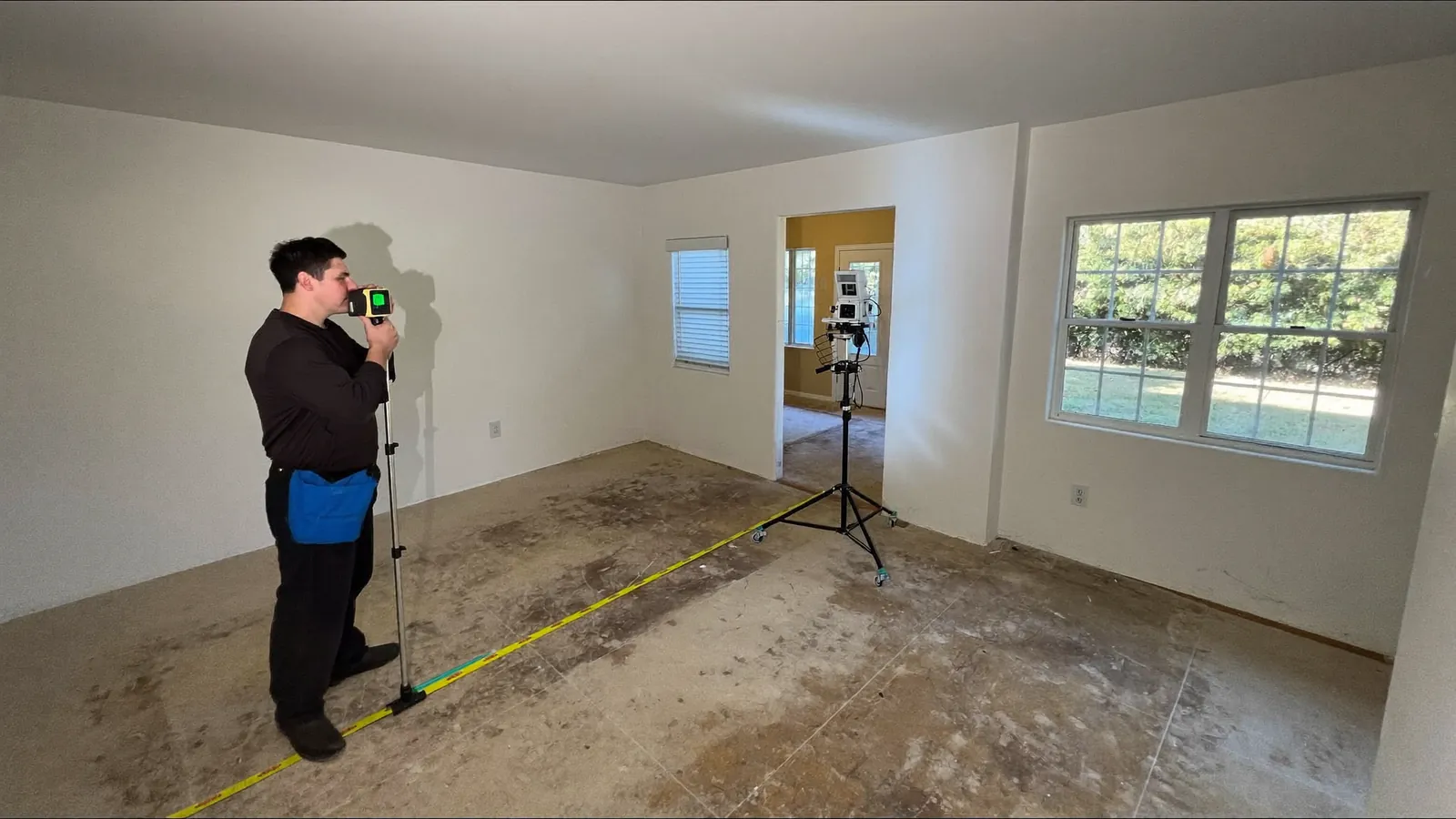
The Village is a compact city of its own, surrounded by Oklahoma City and bordering Nichols Hills, and it was built almost entirely in one era. The housing dates largely from the 1950s through the 1970s, which makes it one of the clearest examples in the metro of what the first generation of Oklahoma slab-on-grade construction looks like after sixty years on expansive clay.
Several things about how those slabs were built matter now. Vapor barriers under residential concrete were not standard practice at the time, so a great many of these slabs sit directly on soil with nothing between — which allows moisture to move up through the concrete continuously and, more importantly, means the soil beneath has always been free to exchange water with the ground around it. Perimeter drainage was essentially unheard of in residential building. Slabs were generally thinner and reinforcement lighter than current practice, with no post-tensioning, so there is less capacity to bridge a soft spot. And the plumbing running beneath them is now sixty years old — cast iron drain lines and galvanized supply lines of that vintage are at or past the end of their service life, and an under-slab leak is one of the most common things we find here.
That last point deserves emphasis, because it changes the repair. A leaking supply or sewer line beneath a slab keeps one zone of clay saturated all year round, and the resulting localized movement mimics classic soil settlement almost perfectly. In a neighborhood where the plumbing is this old, the pattern is common enough that we actively look for it before recommending anything: a warm or damp spot on the floor, an unexplained water bill, movement concentrated around kitchens and bathrooms, or a contour anomaly that does not match what the drainage outside would predict. Piering a house over a live leak means doing the job twice, and we would rather send you to a plumber for a pressure test first.
The other recurring feature is sixty years of landscaping. Beds built up against the house, mulch topped up annually, patios added, drives replaced, trees planted and matured — all of which have steadily changed the falls around these houses from whatever the builder established. Negative grading at the foundation is close to universal in this housing stock and it is cheap to correct. On a reasonable proportion of the houses we survey in The Village, fixing the grading and the downspouts and monitoring through a season is the honest recommendation.
What we do in The Village
Mid-century slab construction understood
Thin, lightly reinforced slabs poured without vapor barriers, assessed for what they are rather than against modern construction.
Under-slab plumbing screened
Active checks for the sixty-year-old supply and drain failures that imitate soil settlement in this housing stock.
Sixty years of grading undone
Built-up beds, added patios and accumulated mulch that now fall toward the house, corrected back to a positive slope.
Original drainage absent
Perimeter drainage retrofitted on houses that were never built with any, which is almost all of them here.
Perimeter and interior piering
Where support has genuinely been lost, piers at the grade beam and through the slab at interior low points.
Realistic about a sixty-year-old slab
Some movement in a house of this age is historic and finished; we will tell you when that is what the numbers show.
Areas and roads we cover
- The Village proper
- Britton Road
- May Avenue corridor
- Pennsylvania Avenue
- North Villa Avenue
- Hefner Road
- Country Club Drive
- Rockwell Terrace
- Durland Avenue
- Greystone Avenue
- Adjacent north OKC streets
- Nichols Hills boundary
Foundation services in The Village
- Foundation inspection and elevation survey, foundation repair, steel and helical piers
- Slab repair, crack injection, house leveling, pier and beam repair
- Concrete leveling, crawl spaces, basement and cellar waterproofing
- French drains and drainage, retaining walls, commercial buildings
Questions from The Village homeowners
My house is from 1962. Should I expect foundation problems?
Expect some movement history, not necessarily a current problem. A slab of that age on central Oklahoma clay has been through sixty shrink-swell cycles and will carry the evidence. The question that matters is whether it is still moving. Plenty of houses in The Village settled into position decades ago and have been stable since — real cracks, old cracks, nothing to do. The elevation survey plus a telltale through a seasonal swing distinguishes historic from active, and that distinction is the whole decision.
What's the risk with sixty-year-old plumbing under the slab?
It is the thing we look for first here. Cast iron drain lines and galvanized supply lines from that era are at or beyond their service life, and a leak under a slab keeps one area of clay permanently saturated, producing localized movement indistinguishable from soil settlement without investigation. The signs are a damp or warm patch on the floor, a water bill that has crept up, movement concentrated near kitchens or bathrooms, or a floor contour that does not match the drainage picture outside. Where we suspect it we will recommend a plumbing test before quoting any structural work.
Do these slabs have a vapor barrier?
Usually not. Vapor barriers under residential slabs were not standard practice in the 1950s and 60s, so most houses of this vintage in The Village were poured straight onto prepared soil. Practically, this shows up as moisture coming up through the slab — which matters when people install modern flooring, since wood and some vinyl systems need a dry substrate. It also means the soil beneath has always exchanged moisture freely with the surrounding ground, which is part of why these slabs track the seasonal cycle noticeably.
Can a thin 1950s slab be piered?
Yes, and it is routine. Most of the work is at the perimeter grade beam, which is the thickened edge carrying the wall loads, rather than on the thin floor section between. Where an interior low point needs support, we cut and restore floor openings for through-slab piers. The lighter construction means we take more care over how the lift is distributed, raising in smaller increments across more points, because there is less capacity in the slab to bridge between them.
The flowerbeds are higher than the slab. Does that matter?
Yes, and it is very common here after sixty years of annual mulch and bed-building. Soil above slab level directs water toward the house instead of away, keeps the perimeter permanently damp, and in some cases bridges the brick ledge so that moisture reaches construction that was never meant to be wet. Cutting the beds back down to establish a positive fall over the first several feet is inexpensive and one of the most effective single things an owner here can do.
Is it worth repairing or should I just sell?
That depends on the scope and on your plans, and the honest answer requires the survey first. What we can say is that foundation condition is disclosable and buyers' inspectors in this market look for it, so an undocumented problem tends to cost more at the negotiating table than it would have cost to fix. A completed repair with an elevation report, permit paperwork and a transferable warranty is a far easier conversation than a crack and no information.
Nearby: Nichols Hills · Bethany · Guthrie · full service area